
Hymenoplasty
What Is the Difference Between Hymenoplasty and Hymenectomy?

Hymenoplasty and hymenectomy are two different gynecological procedures involving hymenal tissue, but they have different purposes. Hymenoplasty aims to reconstruct hymenal tissue, whereas hymenectomy involves removing hymenal tissue when medically indicated. Understanding this distinction is important for patients researching hymen repair surgery, hymen reconstruction, or treatment for a hymenal abnormality.
People searching for hymenoplasty vs hymenectomy, difference between hymenoplasty and hymenectomy, hymen repair surgery, or hymenectomy in Pakistan may be trying to determine which procedure is appropriate for their circumstances. The answer depends on the reason for seeking treatment, the patient’s anatomy, symptoms, and an individual medical assessment.
Cosmetic Gynecology Clinic provides a contact point for inquiries about cosmetic gynecology and related gynecological procedures in Islamabad, Rawalpindi, Lahore, Multan, and Karachi. Patients should confirm the treating clinician’s qualifications and the availability of the relevant procedure at their preferred location.
What Is Hymenoplasty?
Hymenoplasty is a surgical procedure intended to reconstruct hymenal tissue near the vaginal opening. It is also known as hymen reconstruction or, in common usage, hymen repair surgery.
The hymen is a variable fold of tissue that partially surrounds the vaginal opening. Its shape, thickness, elasticity, and appearance differ naturally between individuals.
During hymenoplasty, a qualified surgeon may use suitable remaining hymenal tissue to reconstruct the area. An alternative reconstructive approach may be considered when the available tissue is limited and the technique is clinically appropriate.
Hymenoplasty is generally an elective procedure requested for personal or cultural reasons rather than a treatment needed for normal bodily function. The decision should be voluntary and based on an understanding of the procedure’s limitations, risks, and alternatives.
Importantly, hymenoplasty does not medically restore virginity. Virginity is a social or personal concept rather than a medical diagnosis, and hymenal appearance cannot reliably establish a person’s sexual history.
What Is Hymenectomy?
Hymenectomy is a surgical procedure that involves removing hymenal tissue. It may be recommended when a hymenal abnormality causes symptoms or interferes with normal bodily function.
One example is an imperforate hymen, in which the hymenal tissue completely obstructs the vaginal opening. This may prevent menstrual blood from leaving the vagina and can cause pain or other complications. Depending on the diagnosis, a clinician may recommend a procedure to open the obstruction or remove the relevant tissue.
Hymenectomy may also be considered for selected symptomatic hymenal conditions when other management is not appropriate.
The procedure should be recommended only after an appropriate medical assessment. Not every variation in hymenal appearance requires surgery, and treatment depends on the condition being addressed.
Hymenoplasty vs Hymenectomy: Key Differences
The following table summarizes the main distinctions between the two procedures.
| Feature | Hymenoplasty | Hymenectomy |
|---|---|---|
| Main purpose | Reconstructs hymenal tissue | Removes hymenal tissue |
| General category | Reconstructive surgery | Surgical treatment of selected hymenal conditions |
| Common reason | Elective reconstruction for personal reasons | Treatment of a medically indicated hymenal problem |
| Effect on tissue | Attempts to recreate the tissue structure | Removes the relevant tissue |
| Medical indication | Often elective | Usually based on symptoms or an anatomical condition |
| Assessment required | Yes | Yes |
| Anesthesia | Depends on technique and clinical circumstances | Depends on technique and clinical circumstances |
| Recovery | Depends on reconstruction and individual healing | Depends on the extent of surgery and individual healing |
| Expected outcome | Reconstruction of the hymenal area | Relief of the problem being treated, when successful |
Neither procedure is appropriate for everyone. A qualified clinician should establish the patient’s concern and recommend treatment according to the individual medical circumstances.
What Is the Difference Between Hymenoplasty and Hymenotomy?
Hymenotomy is another term patients may encounter when researching hymenal procedures.
A hymenotomy involves making an opening in hymenal tissue when medically indicated. It may be used to treat an obstructive hymenal abnormality. A hymenectomy, by contrast, involves removing the relevant hymenal tissue.
Hymenoplasty has a different objective: reconstructing hymenal tissue.
These terms should not be used interchangeably. A clinician should explain the diagnosis, the intended purpose of treatment, and why a particular procedure is recommended.
Why Might Someone Consider Hymenoplasty?
People may consider hymenoplasty for personal, cultural, or individual reasons. Some want to understand their reconstructive options following changes in hymenal tissue, while others have questions about anatomy and the potential outcomes of surgery.
A consultation should provide an opportunity to discuss concerns without judgment and establish whether the proposed procedure is technically appropriate.
Patients should understand that hymenal tissue varies naturally and may stretch or change for many reasons. Hymenal appearance does not reliably establish whether a person has had sexual intercourse.
No one should be pressured or threatened into elective surgery. The decision should be voluntary and informed.
Why Might Someone Need a Hymenectomy?
Hymenectomy is generally considered when a hymenal condition causes symptoms or requires medical treatment.
Imperforate hymen
An imperforate hymen completely covers the vaginal opening. It can obstruct menstrual flow and may lead to cyclical pelvic pain or a collection of menstrual blood behind the obstruction. A clinician may recommend a procedure to relieve the obstruction.
Other symptomatic hymenal abnormalities
Some hymenal variations may cause difficulty with tampon insertion, discomfort, or other symptoms. Whether surgery is necessary depends on the diagnosis, the severity of symptoms, and the available treatment options.
Assessment of unexplained symptoms
Pain, abnormal bleeding, or other gynecological symptoms may have causes unrelated to the hymen. A medical assessment is important before attributing symptoms to a hymenal condition or recommending surgery.
Hymenectomy should not be undertaken solely because a person has a hymen that looks different from what they expect. Normal anatomical variation does not automatically require treatment.
How Is Hymenoplasty Performed?
The exact technique depends on the patient’s anatomy, the available tissue, and the surgeon’s assessment.
The process generally includes a consultation, review of medical history, assessment of suitability, discussion of the proposed technique, and appropriate anesthesia and postoperative care.
During reconstruction, the surgeon may use sutures to bring suitable remaining tissue together. In selected cases, an alternative reconstructive approach may be considered.
The clinician should explain the potential results, limitations, complications, and recovery requirements before obtaining informed consent.
How Is Hymenectomy Performed?
The technique used for hymenectomy depends on the anatomical condition being treated.
The clinician first assesses the symptoms and confirms the diagnosis. The surgical plan is then developed according to the type of hymenal abnormality and the patient’s individual circumstances.
The procedure involves removing the relevant hymenal tissue in a suitable clinical setting. The anesthesia plan, extent of surgery, and postoperative arrangements vary.
After treatment, the patient receives instructions on hygiene, wound care, activity restrictions, and follow-up. The clinician should explain what symptoms to expect and which warning signs require medical attention.
Is Hymenoplasty or Hymenectomy More Suitable?
Neither procedure is universally better than the other. They serve different purposes and should not be compared as if they were alternative treatments for the same condition.
Hymenoplasty may be considered when a patient voluntarily seeks reconstruction and a qualified clinician determines that it is appropriate.
Hymenectomy may be recommended when hymenal tissue needs to be removed to treat a specific medical problem.
For an obstructive condition, reconstruction would not necessarily address the underlying issue. Conversely, removing hymenal tissue would not serve the reconstructive objective of elective hymenoplasty.
The correct choice depends on the diagnosis, the patient’s goals, and the clinician’s assessment.
What Are the Risks of These Procedures?
Both procedures involve surgical treatment and may carry risks. The type and likelihood of complications depend on the technique, clinical setting, the patient’s health, and postoperative care.
Potential complications include:
- Pain, tenderness, or swelling.
- Bleeding.
- Infection.
- Scarring or changes in sensation.
- Delayed healing.
- Wound separation, where applicable.
- Discomfort during sexual activity.
- Anesthetic complications, where applicable.
Patients should ask the clinician to explain the risks specific to the recommended procedure.
After surgery, heavy bleeding, fever, worsening pain, unusual or foul-smelling discharge, or other concerning symptoms should prompt medical assessment.
No procedure should be described as entirely risk-free.
How Long Is Recovery After Hymenoplasty and Hymenectomy?
Recovery varies according to the procedure and individual healing.
After hymenoplasty, recovery involves healing of the reconstructed tissue. After hymenectomy, recovery depends on the amount of tissue removed, the reason for surgery, and the patient’s condition.
The treating clinician should provide individualized instructions covering wound care, hygiene, medication, physical activity, sexual activity, and follow-up appointments.
Patients should not assume that the same recovery schedule applies to both procedures. They should follow the instructions specific to the operation they undergo.
Can Hymenoplasty or Hymenectomy Prove Virginity?
No. Neither procedure can establish or verify a person’s sexual history.
Hymenoplasty reconstructs tissue, while hymenectomy removes tissue for a medical indication. Neither procedure creates a medically valid test of virginity.
Hymenal appearance varies naturally, and bleeding during intercourse is not a reliable indicator of previous sexual activity. Some people do not bleed during their first sexual intercourse.
Patients should be cautious of claims that either procedure can provide proof of virginity or guarantee bleeding in the future.
What Should Patients Ask During a Consultation?
Before proceeding with either procedure, patients should understand the medical reason for treatment and the expected outcome.
Useful questions include:
- What condition or concern is being treated?
- Is surgery necessary, or are other options available?
- Why is this particular procedure recommended?
- What are the potential risks and limitations?
- What anesthesia and clinical setting are required?
- What recovery and follow-up should I expect?
- What is included in the total cost?
- What qualifications and experience does the treating clinician have?
- How will my privacy and medical information be protected?
A responsible clinician should explain the options clearly and allow the patient to make an informed, voluntary decision.
How to Choose a Qualified Gynecologist in Pakistan
For hymenoplasty or hymenectomy, patients should verify that the treating professional is appropriately registered and has qualifications and experience relevant to the proposed procedure.
It is important to confirm that the procedure will be performed in a suitable clinical setting with appropriate infection-control measures and postoperative support.
Patients should also ask about the clinician’s experience with the specific procedure, the risks and alternatives, and the availability of follow-up care.
The choice of treatment should be based on a medical assessment rather than promotional claims or price alone.
Consultation at Cosmetic Gynecology Clinic
Cosmetic Gynecology Clinic is a contact point for inquiries about hymenoplasty, hymen repair surgery, and related gynecological procedures.
Patients can ask about consultation arrangements, clinician qualifications, available procedures, potential risks, recovery requirements, and fees. The appropriate procedure should be recommended only after an individual medical assessment.
Consultations and treatment should be provided by appropriately qualified and registered gynecologists or surgeons with relevant training and experience.
Locations for inquiries: Islamabad, Rawalpindi, Lahore, Multan, and Karachi.
Contact numbers:
- 0300 7706050
- 0333 7277272
Please confirm the treating clinician’s qualifications, availability, and in-person treatment location before booking.
Frequently Asked Questions
Is hymenoplasty the same as hymenectomy?
No. Hymenoplasty aims to reconstruct hymenal tissue, while hymenectomy involves removing hymenal tissue for an appropriate medical indication.
Which procedure is used for an imperforate hymen?
An imperforate hymen may require a procedure to open the obstruction or remove the relevant tissue. The clinician determines the appropriate treatment after assessment.
Is hymenectomy performed for cosmetic reasons?
Hymenectomy is generally associated with treating a medical problem involving hymenal tissue. The reason for surgery should be established through a clinical assessment.
Is hymenoplasty always necessary when hymenal tissue changes?
No. Hymenal tissue varies naturally, and changes in appearance do not automatically require treatment.
Do hymenoplasty and hymenectomy have the same recovery period?
No fixed recovery period applies to both. Recovery depends on the specific procedure, extent of tissue treatment, and individual healing.
Can either procedure prove sexual history?
No. Neither procedure can establish a person’s sexual history, and hymenal appearance is not a reliable indicator of previous sexual activity.
Where can I inquire about these procedures in Pakistan?
Contact Cosmetic Gynecology Clinic at 0300 7706050 or 0333 7277272 to ask about consultation arrangements in Islamabad, Rawalpindi, Lahore, Multan, and Karachi.
Conclusion
Hymenoplasty and hymenectomy have different purposes. Hymenoplasty is intended to reconstruct hymenal tissue, while hymenectomy involves removing tissue when medically indicated.
Understanding the difference helps patients seek the appropriate assessment and avoid confusing elective reconstruction with treatment for a medical condition. A consultation with an appropriately qualified gynecologist or surgeon is essential for discussing the diagnosis, available options, risks, and recovery requirements.
For hymenoplasty, hymen repair, and related gynecological consultation inquiries, contact Cosmetic Gynecology Clinic at 0300 7706050 or 0333 7277272.
Medical disclaimer: This article provides general educational information and does not replace an individual medical consultation, diagnosis, or treatment plan.




A hymenoplasty consultation is an appointment with a qualified medical professional to discuss hymen reconstruction, medical suitability, surgical options, potential risks, and recovery requirements. Hymenoplasty, also known as hymen repair surgery, is a procedure intended to reconstruct hymenal tissue near the vaginal opening. The consultation helps patients understand the procedure and decide whether it is appropriate for their individual circumstances.
People searching for hymenoplasty consultation, hymen repair doctor, hymenoplasty appointment in Pakistan, or hymen reconstruction specialist often want to know what happens during the appointment, whether an examination is necessary, which questions to ask, and how to prepare before making a decision.
A professional consultation should provide clear medical information, protect patient privacy, and allow the individual to make a voluntary and informed decision without pressure.
Cosmetic Gynecology Clinic provides a contact point for inquiries about cosmetic gynecology consultations in Islamabad, Rawalpindi, Lahore, Multan, and Karachi. Patients should confirm the availability and qualifications of the treating clinician at their preferred location before booking.
What Is a Hymenoplasty Consultation?
A hymenoplasty consultation is an initial medical assessment for someone considering elective hymenal reconstruction.
During the appointment, the clinician reviews relevant medical history, discusses the patient’s concerns, assesses suitability, and explains the possible treatment options. The clinician may also discuss anesthesia, surgical preparation, expected recovery, risks, costs, and follow-up arrangements.
The consultation is not simply a booking appointment. It is an opportunity to understand what the procedure involves and whether its potential benefits and limitations are acceptable to the patient.
Hymenoplasty does not medically restore virginity. Virginity is a personal or social concept rather than a medical diagnosis, and hymenal appearance cannot reliably establish sexual history. A responsible clinician should explain these limitations before treatment.
Step 1: Discuss Your Concerns and Expectations
The consultation generally begins with a discussion of why the patient is considering hymenoplasty and what they hope to understand or achieve.
Patients may have questions about reconstruction, anatomy, previous injury, recovery, privacy, or the procedure’s limitations.
The clinician should listen without judgment and explain which expectations are realistic. This discussion should take place in a respectful environment where the patient feels comfortable asking questions.
The decision to undergo surgery should be voluntary. A patient should not be pressured by a partner, family member, or another person into an elective procedure.
Step 2: Review Your Medical History
The clinician may ask questions about the patient’s health to determine whether additional evaluation is needed before surgery.
Relevant information can include:
- Existing medical conditions.
- Current prescription and non-prescription medicines.
- Allergies and previous reactions to medication or anesthesia.
- Previous gynecological procedures or injuries.
- Current symptoms, including pain, bleeding, or unusual discharge.
- Previous difficulties with wound healing.
- Relevant surgical and medical history.
Patients should provide accurate information because medical conditions and medications can influence surgical planning, bleeding risk, anesthesia, and recovery.
If there is an active infection, unexplained vaginal bleeding, or another medical concern, the clinician may recommend further assessment or treatment before elective surgery is considered.
Step 3: Is a Physical Examination Necessary?
A physical examination may be recommended when it is clinically appropriate to assess the anatomy and determine whether reconstruction is feasible.
The clinician should explain why an examination is needed, what it involves, and how the findings may affect treatment planning. Informed consent should be obtained before any examination.
Patients can ask questions about privacy, the presence of a chaperone, and the handling of medical information. They should be able to communicate discomfort or decline an examination.
An examination should not be treated as proof of virginity or used to make unsupported conclusions about a person’s sexual history. Hymenal appearance varies naturally and cannot reliably establish whether someone has had sexual intercourse.
Step 4: Assess Medical Suitability for Hymenoplasty
The clinician evaluates whether the procedure is appropriate for the patient’s anatomy, health, and individual circumstances.
The assessment may consider the amount of available hymenal tissue, previous surgery or injury, active medical conditions, healing considerations, and the patient’s expectations.
Some patients may be suitable for a reconstruction using remaining hymenal tissue. In other circumstances, an alternative approach may be discussed, or the clinician may advise against surgery.
There is no single eligibility checklist that applies to everyone. A personalized medical assessment is necessary before deciding on treatment.
If the underlying concern is a medical condition rather than elective reconstruction, another procedure may be more appropriate.
Step 5: Understand the Proposed Surgical Technique
If hymenoplasty is considered appropriate, the clinician should explain the proposed technique in understandable language.
Depending on the anatomy and available tissue, reconstruction may involve suturing suitable remaining hymenal tissue or another approach when clinically appropriate.
Patients should ask:
- What technique is being recommended?
- Why is it appropriate for my circumstances?
- What are its limitations?
- What alternatives are available?
- What results can reasonably be expected?
- What complications may occur?
The technique should be selected according to clinical assessment rather than promotional claims or assumptions that one method is suitable for every patient.
Step 6: Discuss Anesthesia and the Clinical Setting
Hymenoplasty is a surgical procedure, and the anesthesia plan depends on the technique, the patient’s health, and the clinical setting.
The clinician may discuss local anesthesia, sometimes with sedation, or another appropriate anesthetic approach.
Patients should ask whether preoperative tests are required, who will administer anesthesia, what monitoring is available, and whether they will need someone to accompany them home.
The procedure should be performed in a suitable clinical setting with appropriate infection-control measures and arrangements for managing complications.
Step 7: Review the Risks and Limitations
A consultation should include a clear discussion of potential complications.
Possible risks of hymenoplasty include:
- Pain, tenderness, or swelling.
- Bleeding or spotting.
- Infection.
- Scarring or changes in sensation.
- Wound separation or incomplete healing.
- Discomfort during sexual activity.
- Excessive narrowing of the vaginal opening.
- An outcome that differs from expectations.
- Anesthetic complications, where applicable.
The likelihood of complications varies according to the technique, individual health, clinical setting, and postoperative care.
Patients should also understand that hymenoplasty cannot guarantee bleeding during future intercourse. Bleeding varies naturally and is not a reliable indicator of sexual history.
A responsible clinician should answer questions honestly and explain how complications would be assessed and managed.
Step 8: Understand Recovery and Aftercare
The consultation should cover the expected recovery requirements before a patient agrees to surgery.
Recovery varies according to the surgical technique and the individual’s healing response. The surgeon should provide instructions about hygiene, wound care, medication, physical activity, and follow-up.
Patients should ask when they may return to work, resume exercise, and safely return to sexual activity. These decisions should follow the treating clinician’s advice rather than a generic timeline.
The clinician should also explain which symptoms require prompt medical attention, including heavy bleeding, fever, worsening pain, unusual or foul-smelling discharge, or a wound that appears to have opened.
Step 9: Discuss Hymenoplasty Cost and Fees
A consultation is an appropriate time to ask for a clear explanation of the total expected cost.
Fees may vary according to the clinician, technique, anesthesia, facility, consultation requirements, and postoperative care.
Before booking, ask whether the quotation includes:
- The consultation fee.
- The surgeon’s professional fee.
- Anesthesia and facility charges.
- Any required preoperative investigations.
- Prescribed medication.
- Follow-up appointments.
Patients should request confirmation of the current price directly from the clinic rather than relying on outdated or unverified online figures.
The lowest quoted price should not be the only factor in selecting a provider. Relevant qualifications, appropriate facilities, privacy, and follow-up care are important considerations.
Step 10: Decide Whether to Proceed
After the consultation, the patient should have enough information to decide whether to undergo surgery, seek another opinion, or decline treatment.
Before making a decision, confirm that you understand:
- The purpose of the procedure.
- The proposed surgical technique.
- The potential risks and limitations.
- The expected recovery requirements.
- The total cost and follow-up arrangements.
- The treating clinician’s qualifications.
- The clinic’s privacy policies.
- The alternatives available.
Patients should not feel obligated to book surgery during the first appointment. Informed consent requires an understanding of the procedure and a voluntary decision.
How Should Patients Prepare for a Hymenoplasty Consultation?
Preparation can help make the appointment more useful.
Before attending, consider writing down your questions, preparing a list of current medications, and gathering relevant medical information about allergies, previous procedures, and existing health conditions.
If privacy is a concern, ask how appointment details and medical records are handled. If you need an interpreter or another reasonable accommodation, ask the clinic about availability.
You generally do not need to make a surgical decision before attending a consultation. The purpose is to obtain information and discuss suitability.
How to Choose a Qualified Hymenoplasty Doctor
Selecting a suitable medical professional is an important part of planning intimate surgery.
Patients should verify the treating clinician’s registration with the relevant medical regulator, recognized medical qualifications, relevant training, and experience with the proposed procedure.
Before booking, consider asking:
- Is the doctor appropriately registered and qualified?
- Does the doctor have relevant experience in the proposed procedure?
- Where will surgery be performed?
- Are the risks and alternatives explained clearly?
- Is postoperative care available?
- Are fees and follow-up arrangements transparent?
- How is confidential medical information protected?
Avoid providers who promise guaranteed bleeding, claim that surgery can prove virginity, or pressure patients to undergo treatment.
Hymenoplasty Consultation at Cosmetic Gynecology Clinic
Cosmetic Gynecology Clinic is a contact point for patients seeking information about hymenoplasty, hymen repair surgery, and related cosmetic gynecology procedures.
Patients can inquire about consultation arrangements, medical suitability assessments, treating clinician qualifications, procedure options, recovery requirements, and costs.
Consultations and treatment should be provided by appropriately qualified and registered gynecologists or surgeons with relevant training and experience. Patients should confirm the availability of in-person treatment at their preferred location before visiting.
Locations for inquiries: Islamabad, Rawalpindi, Lahore, Multan, and Karachi.
Contact numbers:
- 0300 7706050
- 0333 7277272
Contact the clinic to ask about appointment availability and discuss your questions before making a treatment decision.
Frequently Asked Questions About Hymenoplasty Consultations
What happens during a hymenoplasty consultation?
The clinician reviews medical history, discusses expectations, assesses suitability, and explains the proposed technique, risks, recovery, and costs. An examination may be recommended when clinically appropriate and with informed consent.
Do I need to undergo surgery on the same day as my consultation?
No. A consultation does not obligate you to undergo surgery. Patients should have time to consider the information and make an informed decision.
Is a physical examination always required?
Not necessarily. An examination may be recommended when needed to assess anatomy and plan treatment. The clinician should explain its purpose and obtain consent.
Is a hymenoplasty consultation confidential?
Patients can ask the clinic about its privacy policies, medical-record handling, and appointment procedures before booking.
Can a doctor determine virginity during the consultation?
No. Hymenal appearance cannot reliably establish whether a person has had sexual intercourse. There is no medically reliable examination that can prove virginity.
Will the doctor explain the cost before surgery?
Patients should request a clear quotation and ask what is included, including consultation, anesthesia, facility costs, and follow-up care where applicable.
Where can I book a hymenoplasty consultation in Pakistan?
Contact Cosmetic Gynecology Clinic at 0300 7706050 or 0333 7277272 to ask about consultation arrangements in Islamabad, Rawalpindi, Lahore, Multan, and Karachi.
Conclusion
A hymenoplasty consultation helps patients understand the procedure, assess individual suitability, discuss potential complications, and review recovery and costs before making a decision.
Choosing an appropriately qualified professional, asking clear questions, and understanding the limitations of hymenal reconstruction are important parts of informed decision-making. Patients should be able to discuss intimate health concerns privately and make their own voluntary choices.
For hymenoplasty consultation inquiries, contact Cosmetic Gynecology Clinic at 0300 7706050 or 0333 7277272.
Medical disclaimer: This article provides general educational information and does not replace an individual medical consultation, diagnosis, or treatment plan.
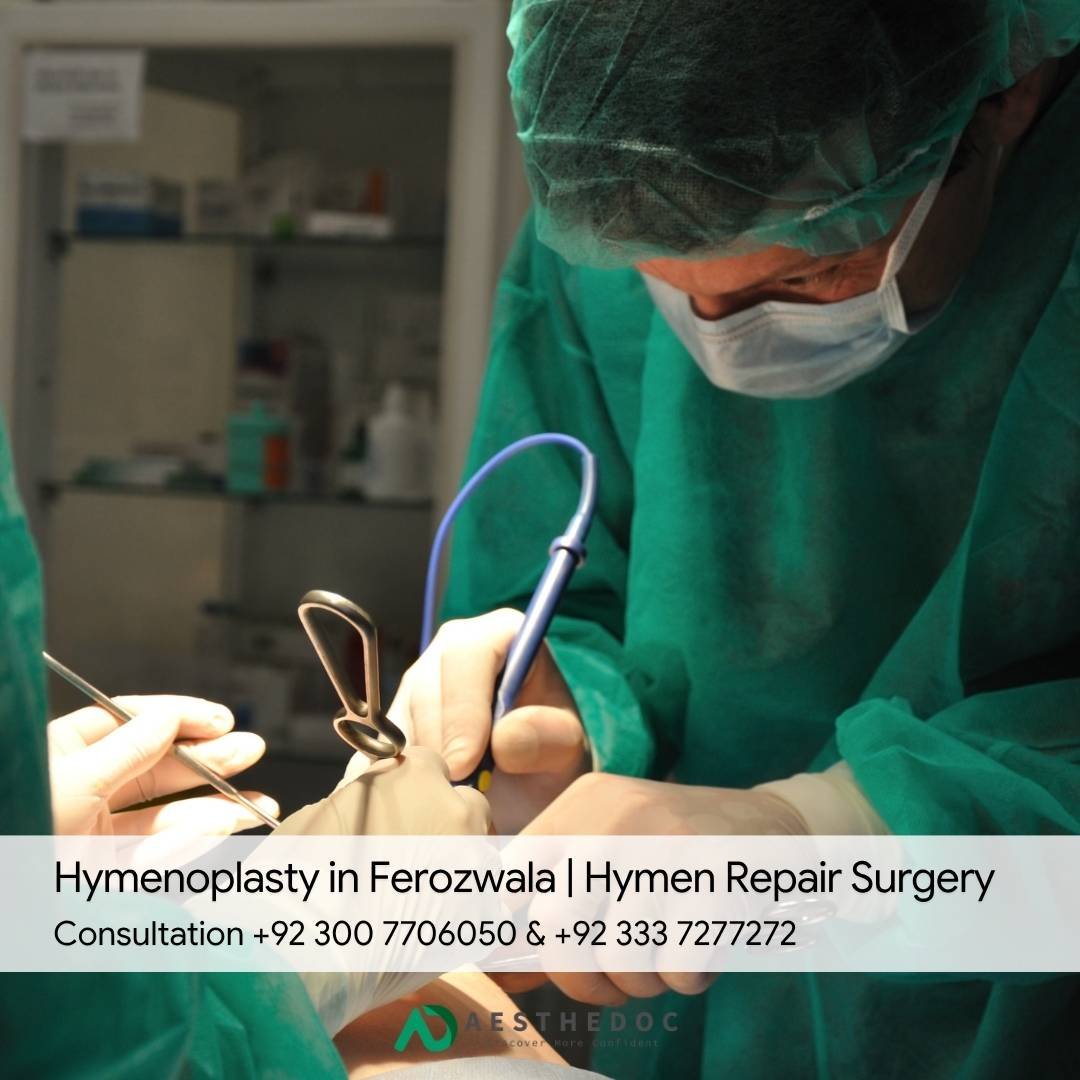
Hymenoplasty in Ferozwala is a cosmetic gynecological procedure intended to repair or reconstruct available hymenal tissue. It is also known as hymen repair surgery, hymen reconstruction, or hymen restoration surgery.
Women searching for hymenoplasty in Ferozwala may consider the procedure for personal, cosmetic, emotional, cultural, or reconstructive reasons. Because hymenal anatomy naturally differs from woman to woman, a private consultation with a qualified gynecologist is important before deciding whether the procedure is appropriate.
For consultation and appointments with Dr. Naila Farukh, call +92 300 7706050.
What Is Hymenoplasty?
Hymenoplasty is a surgical procedure intended to repair or reconstruct available hymenal tissue around the vaginal opening.
The hymen is a thin rim or fold of tissue whose shape, size, thickness, elasticity, and appearance naturally vary between individuals.
During hymen repair surgery, the gynecologist assesses the available tissue and individual anatomy before deciding on an appropriate surgical approach.
Hymenoplasty is generally considered an elective cosmetic or reconstructive gynecological procedure.
Hymen Repair Surgery in Ferozwala
Women searching for hymen repair surgery in Ferozwala often want information about the procedure, recovery, safety, privacy, cost, and expected results before arranging a consultation.
A professional consultation can address:
- Individual anatomy
- Medical history
- Available hymenal tissue
- Surgical technique
- Anesthesia
- Recovery
- Potential complications
- Postoperative care
- Expected outcomes
- Limitations of surgery
Online information can provide general education, but only an individual medical assessment can determine whether hymenoplasty is suitable.
Why Do Women Consider Hymenoplasty?
There is no single reason why a woman may consider hymenoplasty.
Individual reasons can include:
- Personal preference
- Cosmetic concerns
- Reconstruction following injury
- Previous gynecological procedures
- Emotional reasons
- Cultural or social considerations
- Personal desire for hymenal reconstruction
The decision should be voluntary and based on accurate medical information and realistic expectations.
Understanding the Hymen
The hymen is frequently misunderstood.
It is generally not a complete membrane that seals the vagina. It is usually a thin rim or fold of tissue surrounding part of the vaginal opening.
Natural hymenal characteristics can vary considerably in:
- Shape
- Size
- Thickness
- Elasticity
- Amount of tissue
- Size of the opening
Hymenal tissue can also change naturally over time or following physical activity, injury, sexual activity, or medical procedures.
Does the Hymen Prove Virginity?
No.
Hymenal appearance cannot reliably establish whether a woman has had sexual intercourse.
An intact, stretched, altered, or less visible hymen does not provide definitive medical evidence about sexual history.
This is an important fact for women researching hymenoplasty in Ferozwala, hymen repair surgery in Ferozwala, or hymenoplasty in Pakistan.
Hymenoplasty reconstructs tissue; it does not medically establish or prove virginity.
How Does Hymenoplasty Work?
The surgical approach depends on the patient’s anatomy and the amount and condition of available hymenal tissue.
Generally, available tissue is carefully prepared and reconstructed or approximated around the vaginal opening. Sutures may be used to support the reconstructed tissue during healing.
The appropriate technique should be determined after an individual gynecological assessment.
Hymenoplasty Procedure
Although the exact procedure varies between patients, treatment generally involves several stages.
1. Private Consultation
The process begins with a confidential consultation.
The gynecologist discusses:
- Medical history
- Current concerns
- Previous procedures
- Expectations
- Treatment goals
2. Gynecological Assessment
The doctor assesses the relevant anatomy and available tissue to determine whether reconstruction may be appropriate.
3. Treatment Planning
The surgeon explains the proposed surgical approach, anesthesia, recovery, postoperative care, potential complications, and limitations.
4. Hymen Repair Surgery
Available hymenal tissue is carefully repaired or reconstructed using the selected surgical approach.
5. Recovery and Follow-Up
The patient receives postoperative instructions regarding hygiene, medication, physical activity, wound care, and follow-up.
Following postoperative instructions is important for appropriate healing.
Is Hymenoplasty Painful?
Hymenoplasty is performed using appropriate anesthesia or pain-control measures.
Temporary postoperative symptoms may include:
- Mild discomfort
- Tenderness
- Swelling
- Sensitivity
- Minor spotting
The degree of discomfort varies between patients.
The surgeon can provide individualized advice regarding postoperative pain management.
Hymenoplasty Recovery
Recovery following hymen repair surgery in Ferozwala depends on the surgical technique and the individual’s healing process.
Patients may be advised to:
- Follow postoperative instructions carefully
- Take prescribed medication as directed
- Maintain appropriate hygiene
- Avoid strenuous physical activity during early healing
- Avoid unnecessary pressure or friction around the treated area
- Attend recommended follow-up appointments
- Contact the doctor if unusual symptoms develop
The surgeon should advise when it is appropriate to resume activities that could affect the surgical area.
How Long Does Hymenoplasty Recovery Take?
There is no single recovery period that applies to every patient.
Healing may be influenced by:
- Surgical technique
- Individual anatomy
- General health
- Healing response
- Postoperative care
- Physical activity
- Possible complications
The doctor can provide individualized recovery guidance after evaluating the patient.
Does Hymenoplasty Guarantee Bleeding?
No. Hymenoplasty cannot medically guarantee bleeding during future intercourse.
This is an important limitation to understand before surgery.
Hymenal anatomy varies naturally between women, and bleeding is not a reliable medical indicator of previous sexual activity.
A responsible medical consultation should clearly explain this limitation rather than promise a guaranteed outcome.
Hymenoplasty and Virginity
Hymenoplasty reconstructs or repairs physical tissue. It does not establish a woman’s sexual history.
There is no reliable examination of hymenal appearance that can definitively determine whether someone has had sexual intercourse.
Patients considering hymen repair surgery in Ferozwala should therefore have realistic expectations about what the procedure can and cannot accomplish.
Is Hymenoplasty Safe?
Like any surgical procedure, hymenoplasty carries potential risks.
Possible complications can include:
- Infection
- Bleeding
- Pain
- Swelling
- Delayed healing
- Scar formation
- Suture-related problems
- Changes in sensitivity
- Unsatisfactory cosmetic outcome
- Need for additional treatment
Individual risk varies according to the patient’s health, anatomy, surgical technique, anesthesia, and postoperative care.
Choosing an appropriately qualified gynecologist and suitable medical facility is important.
Who May Consider Hymenoplasty?
An adult woman considering hymenoplasty can discuss her circumstances with a qualified gynecologist.
The doctor may consider:
- General health
- Medical history
- Previous gynecological procedures
- Current anatomy
- Available tissue
- Individual expectations
- Potential surgical risks
A consultation is necessary before treatment.
Hymenoplasty After Previous Sexual Activity
Previous sexual activity does not by itself determine whether hymenoplasty is possible.
Suitability depends on the patient’s current anatomy and available tissue.
A qualified gynecologist can assess the individual situation and explain appropriate treatment options.
Patients should provide an accurate medical history so treatment can be planned appropriately.
Hymenoplasty After Injury
Some women may consider hymenal reconstruction following an injury or trauma.
However, not every injury requires hymenoplasty.
A gynecological assessment can determine whether reconstruction is appropriate or whether another form of medical treatment is more suitable.
Hymenoplasty Cost in Ferozwala
The hymenoplasty cost in Ferozwala varies depending on individual treatment requirements.
Factors that may affect the overall cost include:
- Surgical technique
- Complexity of the procedure
- Surgeon fees
- Medical facility charges
- Anesthesia
- Preoperative assessment
- Medicines
- Follow-up care
Because these factors differ between patients and facilities, an exact quotation should be confirmed during consultation.
When comparing prices, ask what is included in the complete treatment rather than comparing the surgical fee alone.
What May Be Included in Hymenoplasty Cost?
Depending on the provider and treatment plan, the overall cost may include:
- Initial consultation
- Gynecological assessment
- Surgeon fee
- Procedure/facility charges
- Anesthesia
- Medication
- Follow-up appointments
Patients should confirm the complete cost and inclusions before scheduling surgery.
Choosing a Hymenoplasty Doctor in Ferozwala
If you are searching for a hymenoplasty doctor in Ferozwala, medical qualifications and relevant gynecological experience should be important considerations.
Patients can ask about:
- Medical qualifications
- Obstetrics and gynecology training
- Aesthetic gynecology experience
- Surgical facility
- Anesthesia arrangements
- Patient privacy
- Follow-up care
- Potential complications
- Expected recovery
- Realistic outcomes
Avoid choosing a provider solely because of a low advertised price or promises of guaranteed results.
Hymenoplasty Consultation for Women From Ferozwala
Women in Ferozwala and surrounding areas may search for:
- Hymenoplasty in Ferozwala
- Hymen repair surgery in Ferozwala
- Hymen repair Ferozwala
- Hymen reconstruction Ferozwala
- Hymenoplasty doctor Ferozwala
- Hymenoplasty cost in Ferozwala
- Hymen repair surgery cost in Ferozwala
- Cosmetic gynecologist Ferozwala
- Cosmetic gynecology Ferozwala
- Hymenoplasty near Ferozwala
- Hymenoplasty in Punjab
- Hymenoplasty in Pakistan
A specialist consultation provides personalized medical information that general online searches cannot provide.
Privacy and Confidentiality
Privacy is an important consideration when seeking intimate gynecological care.
Before making an appointment, patients may ask about:
- Confidential consultation
- Private examination arrangements
- Medical record confidentiality
- Follow-up procedures
- Communication preferences
Sensitive women’s health concerns should be handled professionally and respectfully.
Dr. Naila Farukh – Cosmetic Gynecologist in Pakistan
Women searching for hymenoplasty in Ferozwala or hymen repair surgery in Ferozwala can seek consultation with Dr. Naila Farukh, Cosmetic Gynecologist in Pakistan.
Dr. Naila Farukh
Cosmetic Gynecologist in Pakistan
Qualifications & Experience
- MBBS – Nishtar Hospital
- WMO – Population Welfare Department
- FCPS – Obstetrics & Gynecology
- Fellowship in Aesthetic Gynecology
Dr. Naila Farukh provides gynecological and aesthetic gynecology consultations for women seeking information about cosmetic gynecological procedures.
During consultation, patients can discuss their concerns, medical history, treatment options, expected recovery, potential risks, and realistic expectations.
Why Specialist Consultation Matters
Hymenoplasty involves sensitive gynecological anatomy, making individual assessment important.
A specialist consultation can help determine:
- Whether hymenoplasty is appropriate
- Which treatment approach may be suitable
- What recovery may involve
- Potential complications
- Expected outcomes
- Limitations of surgery
- Postoperative care
No online article can replace an individual medical assessment.
Is Hymenoplasty Permanent?
The outcome and longevity of hymenoplasty can depend on:
- Surgical technique
- Available tissue
- Individual healing
- Postoperative care
- Physical activity
- Patient anatomy
Surgical reconstruction cannot guarantee that reconstructed tissue will remain unchanged indefinitely.
Patients should discuss expected outcomes and limitations with their surgeon before treatment.
Can Hymenoplasty Be Repeated?
Whether repeat hymenoplasty is possible depends on the patient’s anatomy, previous surgery, available tissue, and healing.
A qualified gynecologist should evaluate the individual case before recommending another procedure.
Frequently Asked Questions About Hymenoplasty in Ferozwala
What is hymenoplasty?
Hymenoplasty is a surgical procedure intended to repair or reconstruct hymenal tissue. It is also commonly called hymen repair surgery or hymen reconstruction.
What is hymen repair surgery?
Hymen repair surgery is a procedure designed to reconstruct or approximate available hymenal tissue using an appropriate surgical technique.
Is hymenoplasty available for women from Ferozwala?
Women from Ferozwala can arrange a consultation with a qualified gynecologist to discuss their individual circumstances and treatment options.
How much does hymenoplasty cost in Ferozwala?
The cost varies according to surgical technique, complexity, surgeon fees, facility charges, anesthesia, medicines, and follow-up care. An exact quotation should be obtained during consultation.
Does hymenoplasty guarantee bleeding?
No. Bleeding cannot be medically guaranteed because hymenal anatomy and healing vary between individuals.
Can a hymen examination prove virginity?
No. Hymenal appearance cannot reliably establish whether a woman has had sexual intercourse.
Is hymenoplasty painful?
Appropriate anesthesia or pain-control measures are used during the procedure. Temporary discomfort, swelling, tenderness, or spotting may occur during recovery.
How long does hymenoplasty take?
The procedure time depends on the surgical technique and individual circumstances. The surgeon can provide a more accurate estimate during consultation.
How long is recovery after hymen repair surgery?
Recovery varies between patients. The surgeon will provide individualized postoperative instructions based on the procedure performed.
Can hymenoplasty be performed after sexual activity?
Suitability depends on the patient’s current anatomy and available tissue. A professional assessment is required.
Can hymenoplasty be performed after an injury?
A gynecologist can assess the injury and determine whether hymenal reconstruction is appropriate.
Is hymenoplasty confidential?
Patients can discuss privacy and confidentiality arrangements with the clinic before scheduling a consultation.
Book a Hymenoplasty Consultation in Ferozwala
If you are searching for hymenoplasty in Ferozwala, hymen repair surgery in Ferozwala, or a cosmetic gynecologist in Pakistan, professional consultation is the best way to understand your individual options.
Dr. Naila Farukh can discuss your concerns and explain appropriate treatment options, expected recovery, potential risks, and realistic outcomes.
Appointment & Consultation
Call: +92 300 7706050
A confidential consultation can help you make an informed decision based on your own health and circumstances.
Final Thoughts
Hymenoplasty, also known as hymen repair surgery or hymen reconstruction, is a sensitive cosmetic gynecological procedure.
Women considering the procedure should receive accurate medical information and understand its limitations. Hymenal appearance varies naturally and cannot reliably establish sexual history. Similarly, hymenoplasty cannot guarantee bleeding during future intercourse.
If you are searching for hymenoplasty in Ferozwala, consultation with a qualified gynecologist can help you understand your individual anatomy, treatment options, recovery, risks, and realistic expectations.
For consultation with Dr. Naila Farukh, Cosmetic Gynecologist in Pakistan:
+92 300 7706050
Hymenoplasty is a surgical procedure intended to reconstruct hymenal tissue around the vaginal opening. Also known as hymen repair surgery or hymen reconstruction, it is generally considered an elective procedure for people who choose reconstruction for personal reasons. Before proceeding, patients should understand the purpose of surgery, medical suitability, possible complications, realistic outcomes, recovery requirements, and the importance of selecting a qualified medical professional.
People searching for what to know before hymenoplasty, hymenoplasty preparation, hymen repair surgery before and after, or hymenoplasty consultation in Pakistan often want practical information to help them make an informed decision.
The most important preparation is not simply arranging an appointment or following a list of preoperative instructions. It is understanding what the procedure can achieve, what it cannot guarantee, and whether the benefits and limitations are acceptable to the individual.
Cosmetic Gynecology Clinic provides a contact point for inquiries about cosmetic gynecology consultations in Islamabad, Rawalpindi, Lahore, Multan, and Karachi. Patients should confirm the treating clinician’s qualifications and the availability of in-person treatment at their preferred location.
1. Understand What Hymenoplasty Actually Does
Hymenoplasty is intended to reconstruct hymenal tissue near the vaginal opening. Depending on the individual’s anatomy, a surgeon may use suitable remaining tissue or consider another reconstructive approach.
The procedure is also commonly described as hymen repair surgery or hymen reconstruction surgery. However, these terms should not be confused with hymenotomy or hymenectomy, which may be recommended for specific medical conditions.
Before booking, patients should ask the surgeon to explain the proposed procedure in clear language, including why it is suitable for their circumstances and what limitations apply.
It is important to understand that hymenoplasty does not medically restore virginity. Virginity is a social or personal concept rather than a medical diagnosis. The appearance of hymenal tissue cannot reliably establish a person’s sexual history.
2. Know the Difference Between Hymenoplasty and Other Hymenal Procedures
Understanding medical terminology can help patients avoid confusion when comparing treatment options.
| Procedure | General purpose |
|---|---|
| Hymenoplasty | Elective reconstruction of hymenal tissue |
| Hymen repair | General term for reconstructing or repairing hymenal tissue |
| Hymenorrhaphy | A term used for suturing or repairing hymenal tissue |
| Hymenotomy | Opening hymenal tissue when medically indicated |
| Hymenectomy | Removing hymenal tissue for an appropriate medical indication |
For example, an imperforate hymen that obstructs menstrual flow may require a medically indicated procedure rather than elective reconstruction.
Patients should receive an appropriate assessment before a clinician recommends any of these procedures.
3. Confirm That the Procedure Is Suitable for You
Not everyone is automatically suitable for hymenoplasty. A qualified clinician should assess the patient’s general health, anatomy, medical history, expectations, and ability to provide informed consent.
The assessment may consider:
- The amount and condition of the available hymenal tissue.
- Previous surgery or injury involving the area.
- Relevant medical conditions and allergies.
- Current medicines and any potential anesthesia concerns.
- Active infections or other untreated gynecological conditions.
- Expected recovery requirements and access to follow-up care.
An infection or another medical concern may need evaluation or treatment before elective surgery is considered.
Patients should provide accurate medical information and ask questions about anything they do not understand. The final decision should be based on an individualized clinical assessment, not a general eligibility list found online.
4. Understand the Limitations of Hymenoplasty
Realistic expectations are essential before undergoing any elective surgical procedure.
Hymenoplasty aims to reconstruct tissue, but it cannot guarantee a particular appearance, a permanent outcome, or bleeding during future sexual intercourse.
The hymen varies naturally in shape, thickness, and elasticity. Some people experience changes in hymenal tissue without noticing a specific event, while others do not experience bleeding during sexual activity.
Neither hymenal appearance nor bleeding can reliably establish sexual history. Patients should be cautious of anyone claiming that surgery can provide medical proof of virginity.
A responsible clinician should discuss these limitations before obtaining informed consent.
5. Choose a Qualified and Registered Surgeon
The qualifications and experience of the treating professional are important considerations when planning intimate surgery.
Before booking hymenoplasty, patients should verify the clinician’s registration with the relevant medical regulator, recognized qualifications, and relevant training and experience in the proposed procedure.
Ask the clinician:
- What medical qualifications and relevant surgical training do you have?
- Are you registered and authorized to provide this treatment?
- What technique do you recommend, and why?
- Where will the procedure be performed?
- What risks and alternatives should I consider?
- What postoperative care and follow-up are available?
The clinic should provide clear information about the treating professional and the setting where the procedure will take place.
Patients should not rely exclusively on promotional claims, online reviews, or low prices when making a decision.
6. Ask About the Surgical Technique
Hymenoplasty is not performed using one identical technique for every patient.
The surgeon may consider a reconstruction using remaining hymenal tissue or another approach when clinically appropriate. The available tissue, individual anatomy, and medical circumstances influence the choice.
Before consenting, ask the surgeon to explain:
- The proposed technique.
- The expected purpose and limitations.
- The anesthesia plan.
- The anticipated recovery requirements.
- The potential for complications.
- Whether another treatment would be more appropriate.
The explanation should be individualized. Patients should not assume that a technique advertised by one provider is suitable for everyone.
7. Review Your Medical History and Medications
A preoperative assessment generally includes questions about health conditions, previous procedures, allergies, and current medication use.
Some medical conditions or medications may influence bleeding risk, anesthesia, infection risk, or wound healing. The treating clinician needs this information to plan appropriate care.
Patients should disclose all prescribed medicines, over-the-counter products, and supplements they use. They should not stop prescribed medication independently or begin a new product in preparation for surgery without appropriate medical advice.
If an active infection, unexplained vaginal bleeding, or another concerning symptom is present, the clinician may recommend further assessment before elective treatment.
8. Understand the Anesthesia and Clinical Setting
The anesthesia plan depends on the procedure, the patient’s health, and the clinical setting. Local anesthesia, sometimes with sedation, or another appropriate anesthetic approach may be considered.
Patients should ask what anesthesia is planned, who will administer it, whether preoperative tests are required, and what monitoring will be available.
The procedure should take place in a suitable clinical setting with appropriate infection-control measures, trained personnel, and a clear plan for managing complications.
If sedation or another anesthetic method affects alertness, the facility may require an accompanying adult and advise against driving afterward. Follow the specific instructions provided by the treating team.
9. Prepare for Recovery Before the Procedure
Postoperative care is an important part of surgical planning. Patients should understand the recovery requirements before committing to a procedure.
The surgeon should explain how to care for the surgical area, manage discomfort, and recognize symptoms that require medical attention.
Depending on the technique, patients may need temporary restrictions on strenuous exercise, activities that create direct pressure or friction, vaginal insertion, and sexual activity.
The exact restrictions and their duration should be determined by the treating clinician. Patients should not rely on a fixed recovery timeline from an online article.
It is also sensible to arrange any necessary time away from work and ensure that the clinic can be contacted if a postoperative concern develops.
10. Know the Possible Risks and Complications
Hymenoplasty carries potential surgical risks. The likelihood of complications varies according to the technique, individual health, clinical setting, and postoperative care.
Possible complications include:
- Pain, tenderness, or swelling.
- Bleeding or spotting.
- Infection.
- Scarring or changes in sensation.
- Wound separation or incomplete healing.
- Discomfort during sexual activity.
- Excessive narrowing of the vaginal opening.
- A result that differs from expectations.
- Anesthetic complications, where applicable.
Patients should ask how complications are managed and whom to contact if a problem develops.
After surgery, heavy bleeding, fever, worsening pain, foul-smelling discharge, or a wound that appears to have opened should prompt medical assessment. Severe symptoms may require urgent medical attention.
No responsible provider should promise a completely risk-free procedure.
11. Understand Hymenoplasty Cost Before Booking
The total cost of hymenoplasty can vary according to the clinician, surgical technique, anesthesia, clinical facility, consultation requirements, and follow-up arrangements.
Before making a decision, request a clear quotation and ask whether it includes:
- The initial consultation.
- The surgeon’s professional fee.
- Anesthesia and facility charges.
- Any required preoperative assessment.
- Prescribed medication.
- Follow-up appointments and postoperative care.
A transparent quotation helps patients understand the expected expense and compare treatment arrangements fairly.
The lowest price should not be the only deciding factor. Professional qualifications, suitable facilities, privacy, and access to follow-up care are also important.
12. Discuss Privacy and Confidentiality
Because hymenoplasty involves intimate medical information, patients may want to understand how the clinic protects their privacy.
Before booking, ask how appointment details and medical records are handled, who can access the information, and what confidentiality policies apply.
Patients should also be able to discuss the procedure without judgment or pressure. The clinician should explain the limits of confidentiality where applicable and answer questions about the clinic’s policies.
If the decision to undergo surgery is driven by threats, coercion, or fear of harm, personal safety should take priority. A patient should not be pressured into an elective procedure by a partner, family member, or another person.
13. Make an Informed and Voluntary Decision
Before proceeding with hymenoplasty, patients should have enough time to consider the information provided by the surgeon.
A useful final checklist includes:
- I understand the purpose of the procedure.
- I understand that the procedure does not medically restore virginity.
- I know that bleeding during future intercourse cannot be guaranteed.
- I understand the possible complications and limitations.
- I have discussed alternatives and medical suitability.
- I know the expected recovery requirements.
- I understand the total cost and follow-up arrangements.
- I have verified the treating clinician’s qualifications.
- I am making the decision voluntarily.
Patients should feel comfortable postponing or declining treatment if they remain uncertain. A consultation does not obligate someone to undergo surgery.
What Happens During a Hymenoplasty Consultation?
A consultation typically involves discussing the patient’s concerns, reviewing medical history, assessing suitability, and explaining the proposed procedure.
An examination may be recommended when clinically appropriate and with informed consent. The clinician should explain why it is needed and how the findings affect treatment planning.
The consultation should also cover the surgical technique, anesthesia, possible complications, alternatives, recovery, costs, and follow-up.
Patients can use the appointment to ask questions and determine whether they feel comfortable with the proposed care. A responsible clinician will support an informed decision rather than pressure the patient to book immediately.
Hymenoplasty Consultation at Cosmetic Gynecology Clinic
Cosmetic Gynecology Clinic is a contact point for patients seeking information about hymenoplasty, hymen repair surgery, and related cosmetic gynecology procedures.
Patients can inquire about consultation arrangements, clinician qualifications, treatment options, potential risks, recovery requirements, privacy policies, and fees.
Consultations and treatment should be provided by appropriately qualified and registered gynecologists or surgeons with relevant training and experience. Patients should confirm the availability of the treating professional and in-person treatment at their preferred location before visiting.
Locations for inquiries: Islamabad, Rawalpindi, Lahore, Multan, and Karachi.
Contact numbers:
- 0300 7706050
- 0333 7277272
Contact the clinic to ask about appointment availability and discuss questions about eligibility, preparation, and the procedure.
Frequently Asked Questions About What to Know Before Hymenoplasty
What should I know before undergoing hymenoplasty?
Understand the purpose, limitations, potential risks, recovery requirements, cost, and alternatives. Consult an appropriately qualified professional and make a voluntary, informed decision.
Do I need a medical examination before hymenoplasty?
An examination may be recommended to assess anatomy and determine whether the proposed technique is suitable. The clinician should explain its purpose and obtain informed consent.
Should I stop taking medication before surgery?
Do not stop prescribed medication independently. Tell the treating clinician about all medicines and supplements, and follow the individualized preoperative instructions.
Is hymenoplasty guaranteed to be successful?
No surgical procedure can guarantee a particular outcome. Results vary, and potential complications should be discussed before treatment.
Will hymenoplasty guarantee bleeding during future intercourse?
No. Bleeding is variable and cannot be guaranteed. It is not a reliable indicator of sexual history.
How do I choose a qualified hymenoplasty surgeon?
Verify the clinician’s registration, recognized qualifications, relevant surgical experience, clinical facilities, and postoperative-care arrangements.
Can I change my mind after a consultation?
Yes. Attending a consultation does not obligate a patient to undergo surgery. The decision should remain voluntary and informed.
Where can I inquire about hymenoplasty in Pakistan?
Contact Cosmetic Gynecology Clinic at 0300 7706050 or 0333 7277272 to ask about consultation arrangements in Islamabad, Rawalpindi, Lahore, Multan, and Karachi.
Conclusion
Before hymenoplasty, patients should understand the proposed technique, eligibility requirements, possible complications, recovery needs, cost, and limitations of reconstruction. Selecting a qualified professional and receiving clear information are important steps toward making an informed decision.
A thorough consultation helps establish whether the procedure is appropriate and provides an opportunity to discuss alternatives, privacy, and postoperative care.
For hymenoplasty consultation inquiries, contact Cosmetic Gynecology Clinic at 0300 7706050 or 0333 7277272.
Medical disclaimer: This article provides general educational information and does not replace an individual medical consultation, diagnosis, or treatment plan.


-

 Hymen Reconstruction Surgery3 years ago
Candidates For Hymen Repair, Symptoms, Causes, Treatment & Cost
-

 Vaginal Tightening3 years ago
Vaginal Tightening HIFU Treatment
-

 Hymen Reconstruction Surgery3 years ago
Hymenoplasty Surgery in UAE, Dubai’s Expertise in Hymenoplasty
-

 Hymen Reconstruction Surgery3 years ago
Hymen Reconstruction Surgery in Pakistan, Hymen Repair Surgery Cost
-

 Hymenoplasty3 years ago
Hymenoplasty Surgical Repair in Pakistan
-

 Hymenoplasty3 years ago
Hymenoplasty in Rawalpindi, Hymen Repair Surgery
-

 Vaginal Rejuvenation3 years ago
Vaginal Rejuvenation Non Surgical, Rawalpindi & Lahore
-

 Labiaplasty3 years ago
Expert Labiaplasty Surgery in Turkey, Labiaplasty Cost in Turkey